Section 1: Motion and Measurement of Distances, Light, Shadows and Reflections, Electricity and Circuits, Fun with Magnets, Our Environment, Sorting and Separation of Materials, Changes Around Us, Living Organisms and Their Surroundings, Food and its Components, Fibre to Fabric.
Achievers Section: Higher Order Thinking Questions - Syllabus as per Section 1
Three students gave the following statements during a classroom discussion. This is what they said: David: The motion of a vibrating tuning fork exhibits periodic motion. Nora: The blades of the fan is said to move in a rotatory motion. James: The length of the footsteps is the same for different people. Which student(s) made incorrect statement(s)?
Q.2
Spot the principle on which the distillation method works for separating alcohol and water mixture?
Q.3
Answer the following question and choose the correct option: In which direction does the bar magnet come to rest when suspended freely?
Q.4
Which of the following is a behavioural adaptation?
A cactus storing water in its stem
A bird migrating to warmer climates in winter
A plant developing thorns for protection
A fish having streamlined body shape
Q.5
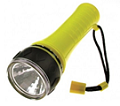
Spot the energy conversions that take place in a torch: 1. Chemical → electrical → light 2. Electrical → chemical → light 3. Electrical → heat → chemical 4. Light → chemical → electrical
Q.6
Complete the following sentences and select the correct option: I- If it does not rain in a region for a year or more then the soil continues to lose water by _______________. II- Heavy rains may lead to rise in the level of water in _________.
Q.7
Which of the following statement is INCORRECT related to nutrients present in food? A. There is no loss in vitamins if fruits and vegetables are washed after peeling or cutting them. B. The skins of many fruits are rich in many nutrients. C. Cooking kills most of the nutrients present in foods. D. Rice and pulses will lose their vitamins and minerals if they are repeatedly washed.
Q.8
State whether the following statements are true or false: 1. If the source of light is closer to the object, a smaller shadow is formed than when the source of light is far from the object. 2. The ground, walls of the rooms, a building, or other such surfaces act as a screen for the shadows you observe in everyday life.
Q.9
Given below are two groups of fibres namely I and II: Group I - Cotton, Jute, hemp Group II - Polyester, Nylon, Acrylic On what basis have these fibres been grouped?
Q.10
Observe the two pictures shown below: Identify the similarity between them related to the characteristics of all living things:
Your Score: 0/10
Answers to Sample Questions from CREST Olympiads:
Q.1
c
Q.2
a
Q.3
a
Q.4
b
Q.5
a
Q.6
d
Q.7
a
Q.8
b
Q.9
b
Q.10
c
Answers to Sample Questions from CREST Olympiads:
Q.1 : c | Q.2 : a | Q.3 : a | Q.4 : b | Q.5 : a | Q.6 : d | Q.7 : a | Q.8 : b | Q.9 : b | Q.10 : c